News
The MOOC “Chemistry and Society” for International Students in China Is Now Online.
To enrich academic resources for international students and improve their learning efficiency, the official website of the International Student Center, in partnership with the Xueyin Online platform, has jointly launched Professor Che Ping's MOOC course Chemistry and Society. Starting today, it can be accessed quickly via the International Student Center official website – MOOC Center. International students are welcome to study online.
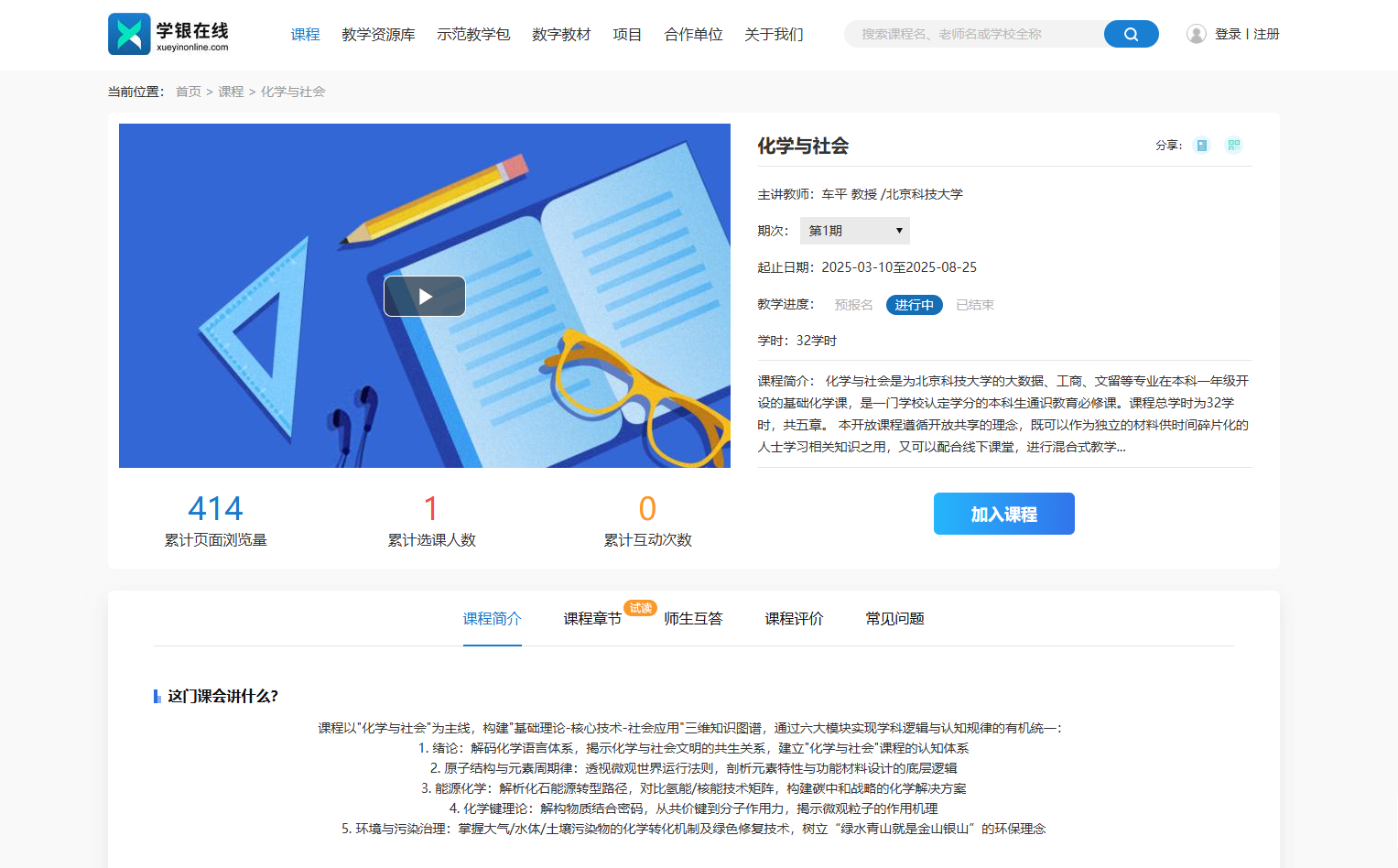
Course Title: Chemistry and Society (32 class hours)
Instructor: Professor Che Ping / University of Science and Technology Beijing
Course Introduction: Chemistry and Society is a basic chemistry course offered to first-year undergraduates in majors such as Big Data, Business Administration, and Liberal Arts for International Students at the University of Science and Technology Beijing. It is a credit-bearing compulsory general education course for undergraduates recognized by the university. The course consists of 32 class hours in total and is divided into five chapters. Following the philosophy of openness and sharing, this open course can be used as independent material for people with fragmented time to learn relevant knowledge, and can also be combined with offline classrooms for blended teaching.
Course Content: Taking "Chemistry and Society" as the main thread, the course builds a three-dimensional knowledge map of "basic theory–core technology–social application," and achieves an organic unity of disciplinary logic and cognitive patterns through six major modules:
Introduction: Decode the language system of chemistry, reveal the symbiotic relationship between chemistry and social civilization, and establish the cognitive system of the "Chemistry and Society" course;
Atomic Structure and the Periodic Law of Elements: Examine the operating laws of the microscopic world, and analyze the underlying logic of elemental properties and functional material design;
Energy Chemistry: Analyze the transformation pathways of fossil energy, compare hydrogen/nuclear energy technology matrices, and construct chemical solutions for carbon neutrality strategies;
Chemical Bond Theory: Deconstruct the codes of material combination, from covalent bonds to molecular forces, and reveal the mechanisms of interaction among microscopic particles;
Environment and Pollution Control: Master the chemical transformation mechanisms and green remediation technologies of air/water/soil pollutants, and establish the environmental protection concept that "lucid waters and lush mountains are invaluable assets."
Target Learners:
Undergraduates in relevant majors at USTB: Build a chemistry thinking framework and consolidate the foundation for interdisciplinary studies;
STEM professionals: Expand applied chemistry perspectives and enhance sensitivity to technological innovation;
General public learners: Decode the chemistry in everyday life and cultivate scientific decision-making abilities;
Educators: Obtain examples of blended teaching and optimize teaching design plans.
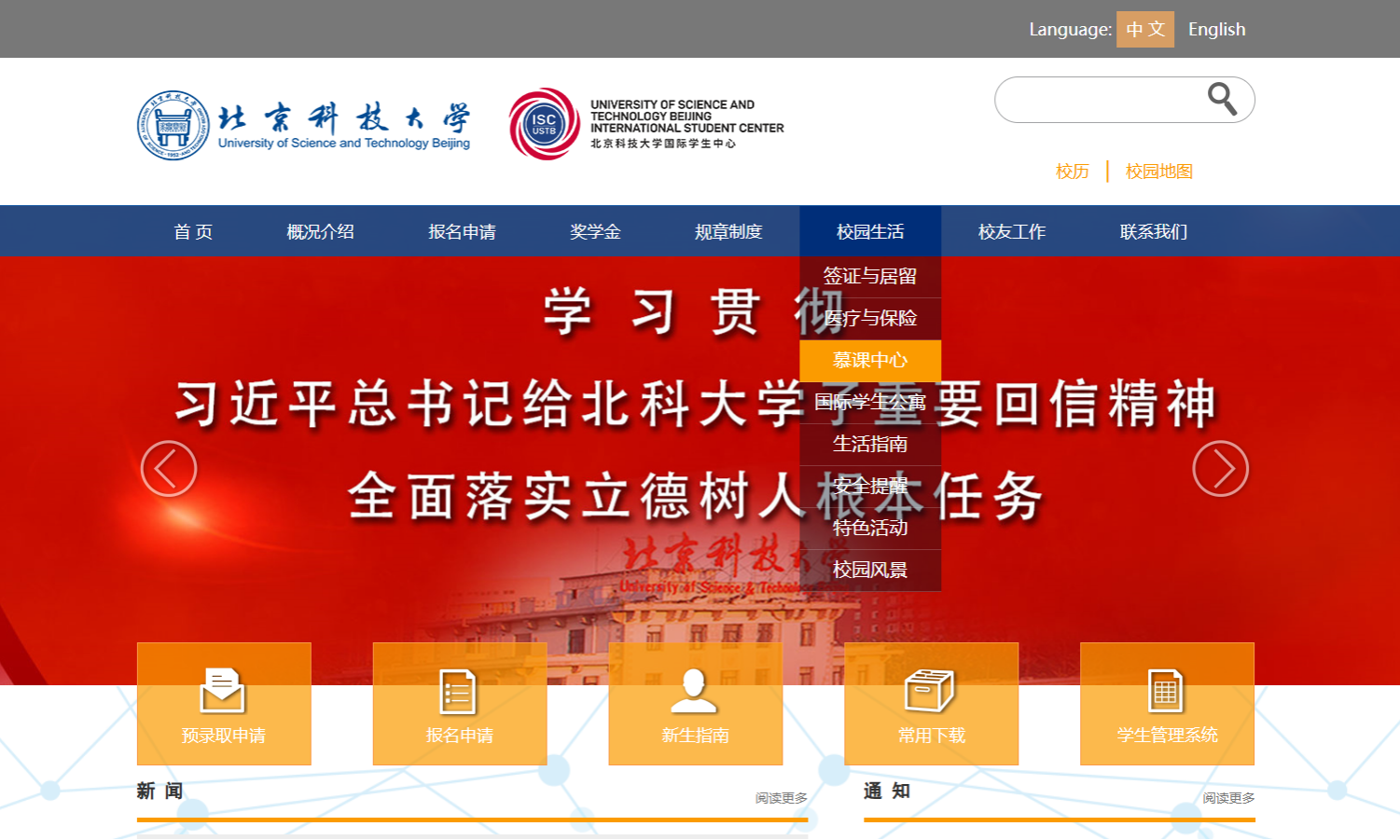
Learning Path: University of Science and Technology Beijing International Student Center → Campus Life → MOOC Center.